
THE OCEAN CITIES
Faced with extinction, humanity searched for safety beyond the battlefields.
The answer came from the oceans.
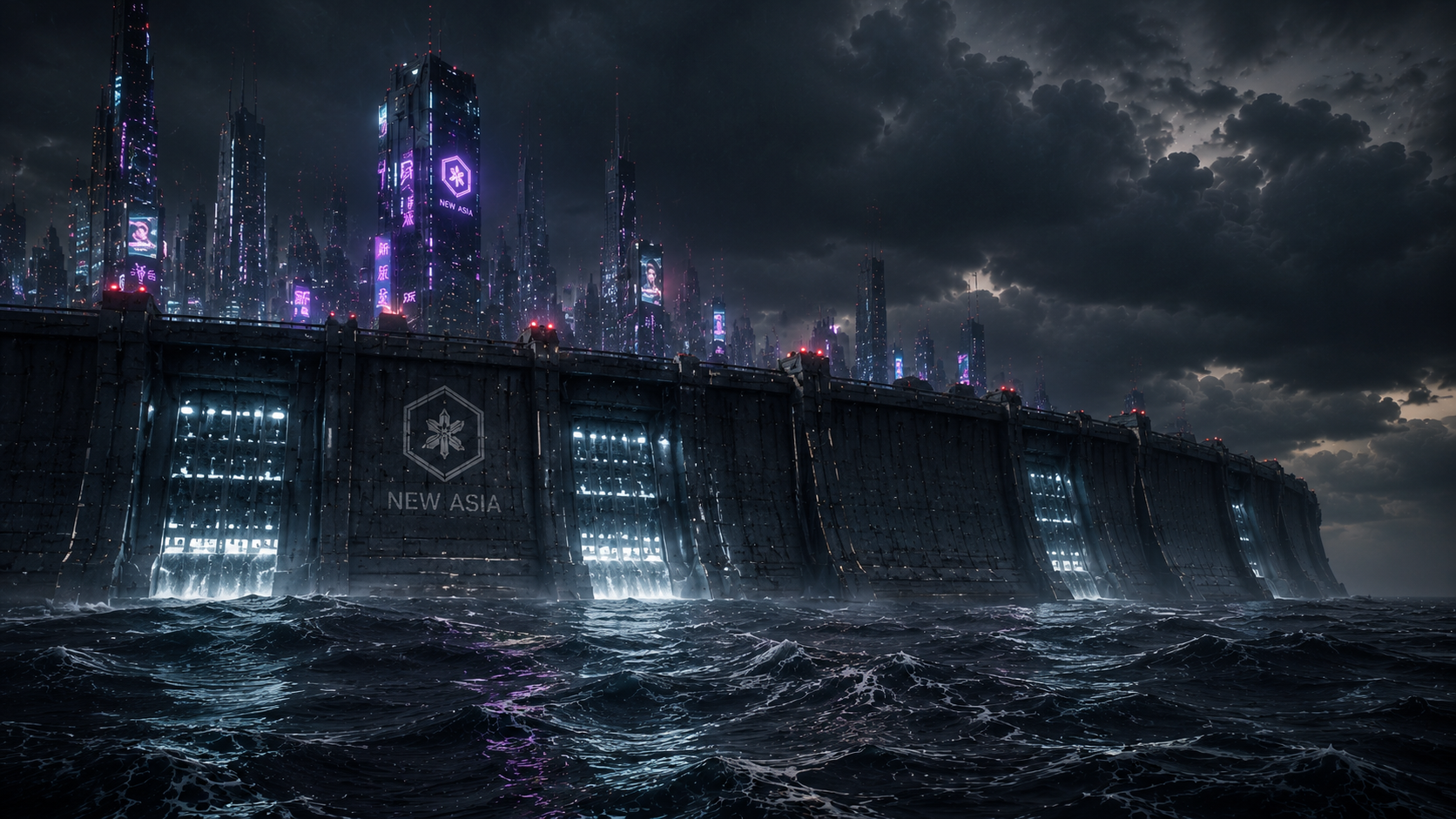
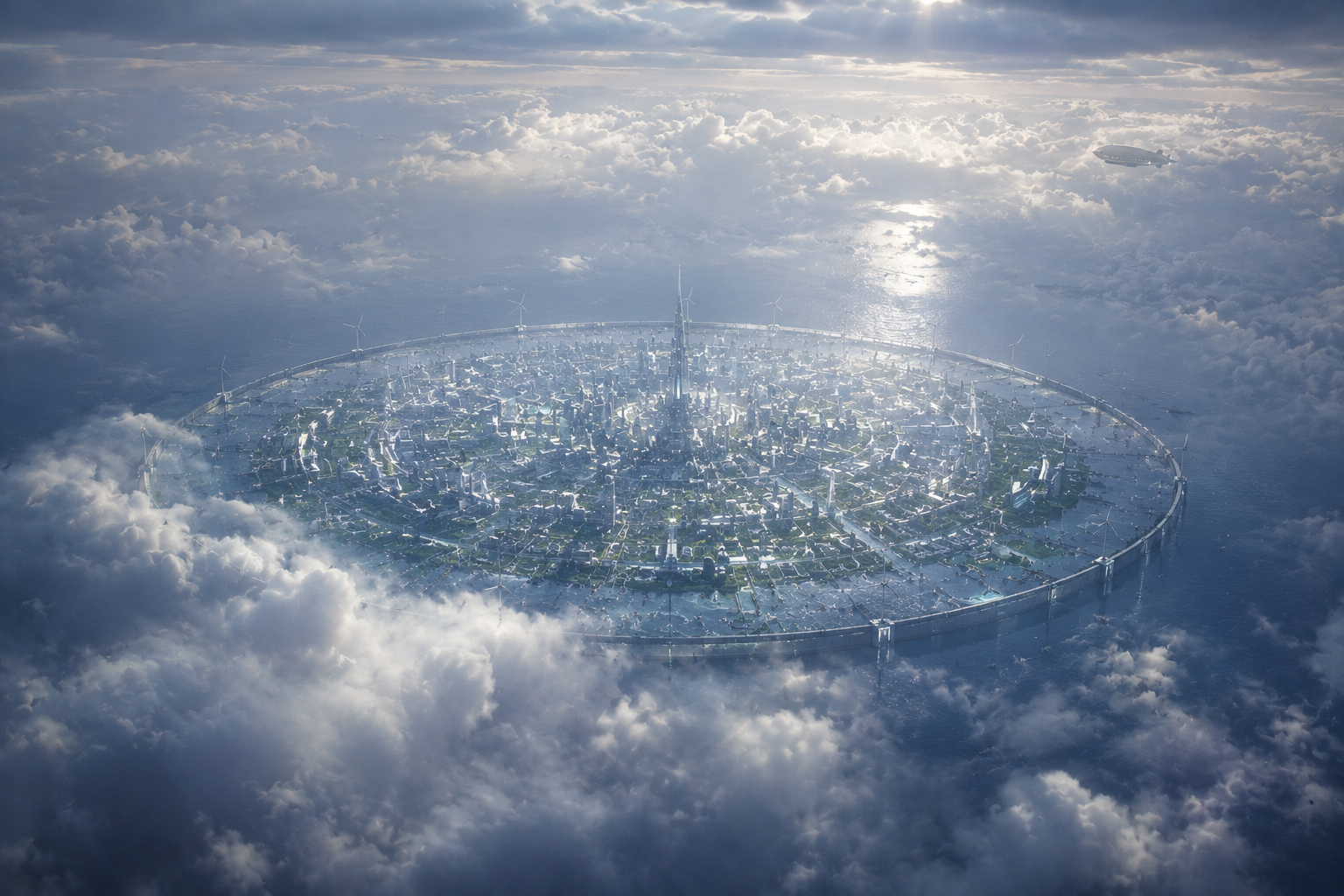
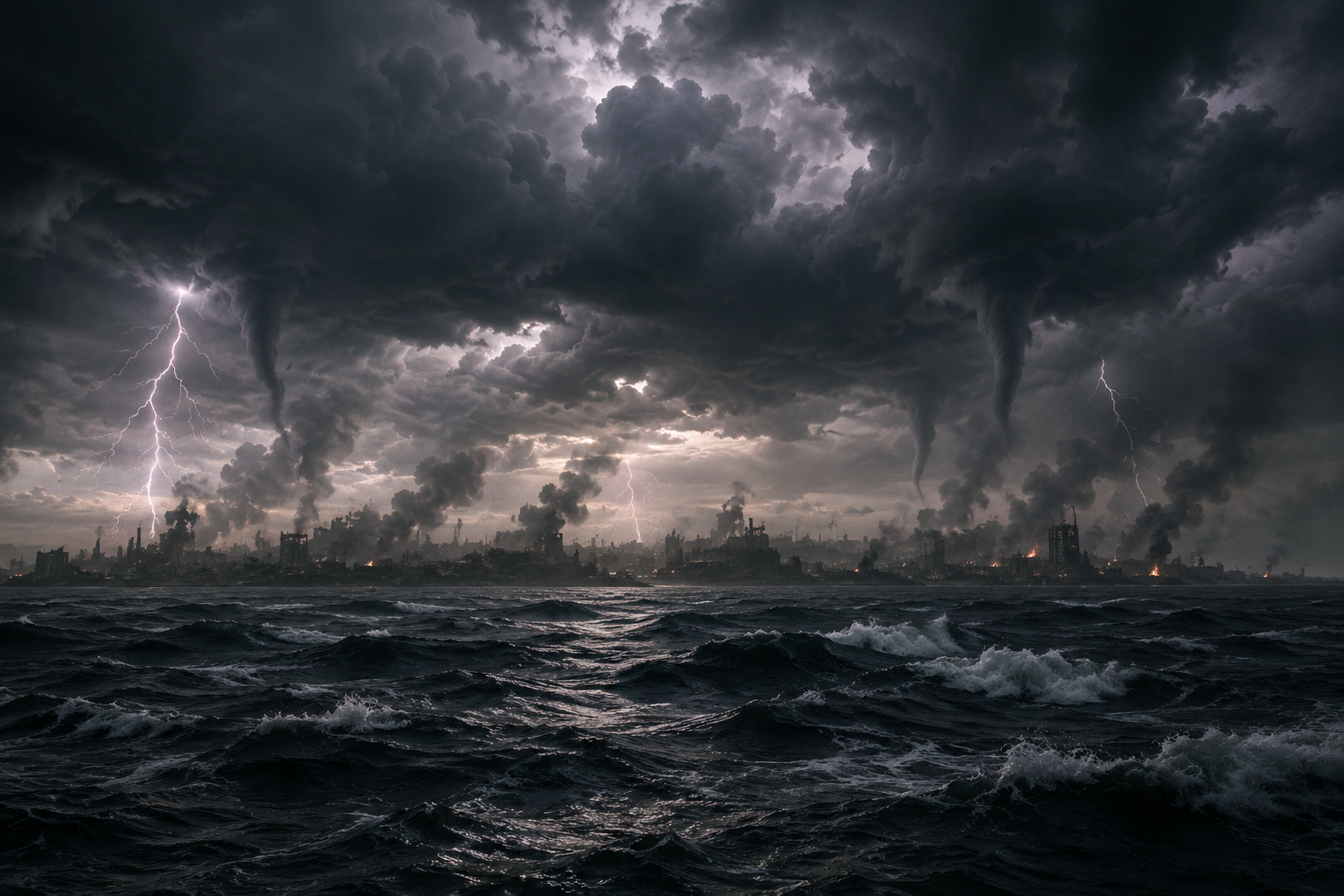
Far from contaminated coastlines, vast floating cities were constructed behind immense defensive barriers designed to withstand storms, rising sea levels, and the chaos consuming the mainland.
For the first time in generations, people found places where war could not easily reach them.
These cities became symbols of survival.
But they could never save everyone.
Over time, strict immigration controls were established.
The gates closed.
The ocean cities endured.
The mainland was left behind.
NOVA - EDEN
Originally conceived as a joint American, European, and Chinese mission to establish humanity's first permanent colony beyond Earth, New Eden was never intended to become a refuge.
The Great Wars changed everything.
As conditions on Earth deteriorated, the project was transformed into a lifeboat for civilization itself.
More than a century later, New Eden remains in orbit.
Its rotating ring generates artificial gravity, while vast agricultural systems provide food and oxygen for its inhabitants.
Though self-sufficient, the station houses only a few hundred residents.
For most people living on Earth, New Eden is less a place than a reality.
It is a legend.
A distant reminder that humanity once reached for the stars.
A DIVIDED HUMANITY
By Hitomi's time, humanity exists in three worlds.
Those who remain stranded on the mainland.
Those who found refuge within the ocean cities.
And the fortunate few who call New Eden home.
On the mainland, rogue AIs now exist alongside humans. Cooperation exist in a fragile balance, but distrust remains widespread.
Everything has a value.
Including human life.
In many regions, humans are simply cheaper than machines.
Each world lives a different reality.
Each tells a different version of history.
Nobody cares who started the wars anymore.
Nobody cares which flag once flew above the ruins.
Because there are no countries left.
Only survivors.
NEW EUROPA
Population: 11.5 million
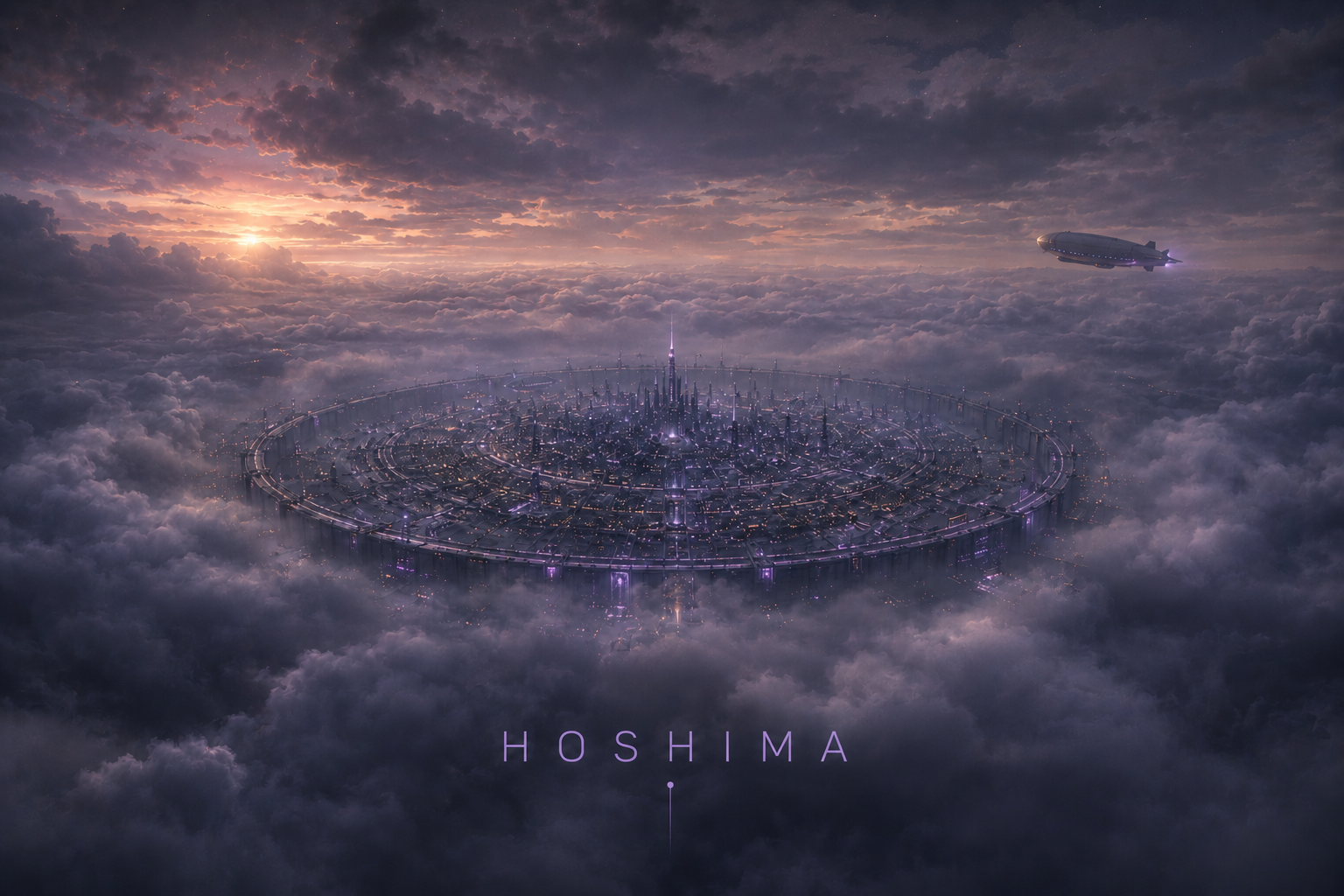
Hoshima (New Asia)
population: 8,9 million
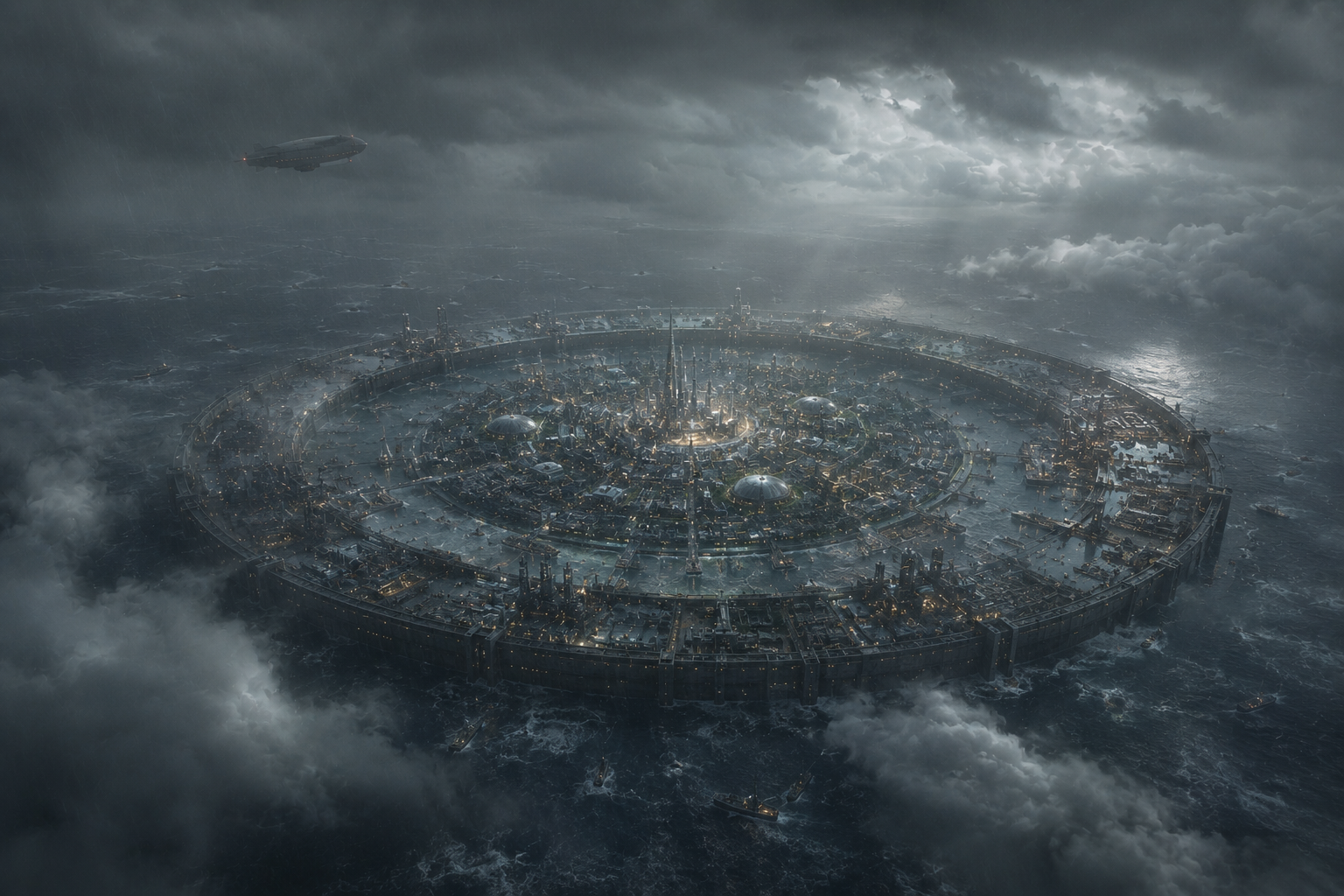
DEVAYAN CAPITOL
Estimated population: 8.8 million
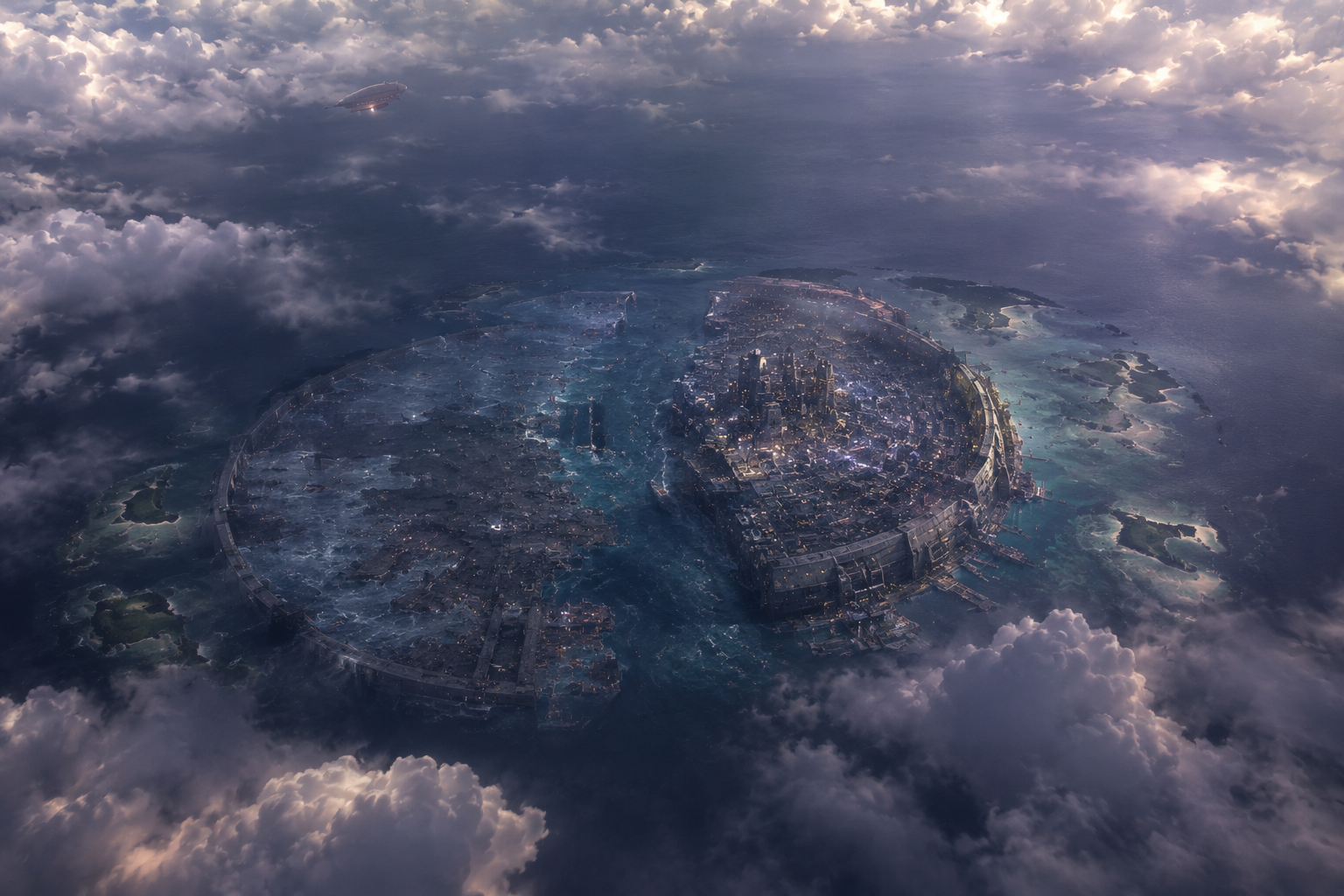
Of the five originally planned citys for humankind, Ciudad Magna early on suffered badly from overpopulation, civil unrest and eventually a civil war. Now rests stranded in the south Atlantic, half of the city broken apart and flooded.
A saying:
"Half the city is dead... and the other half wishes it was."
CIUDAD MAGNA - The lost city
Estimated population: 2–3 million
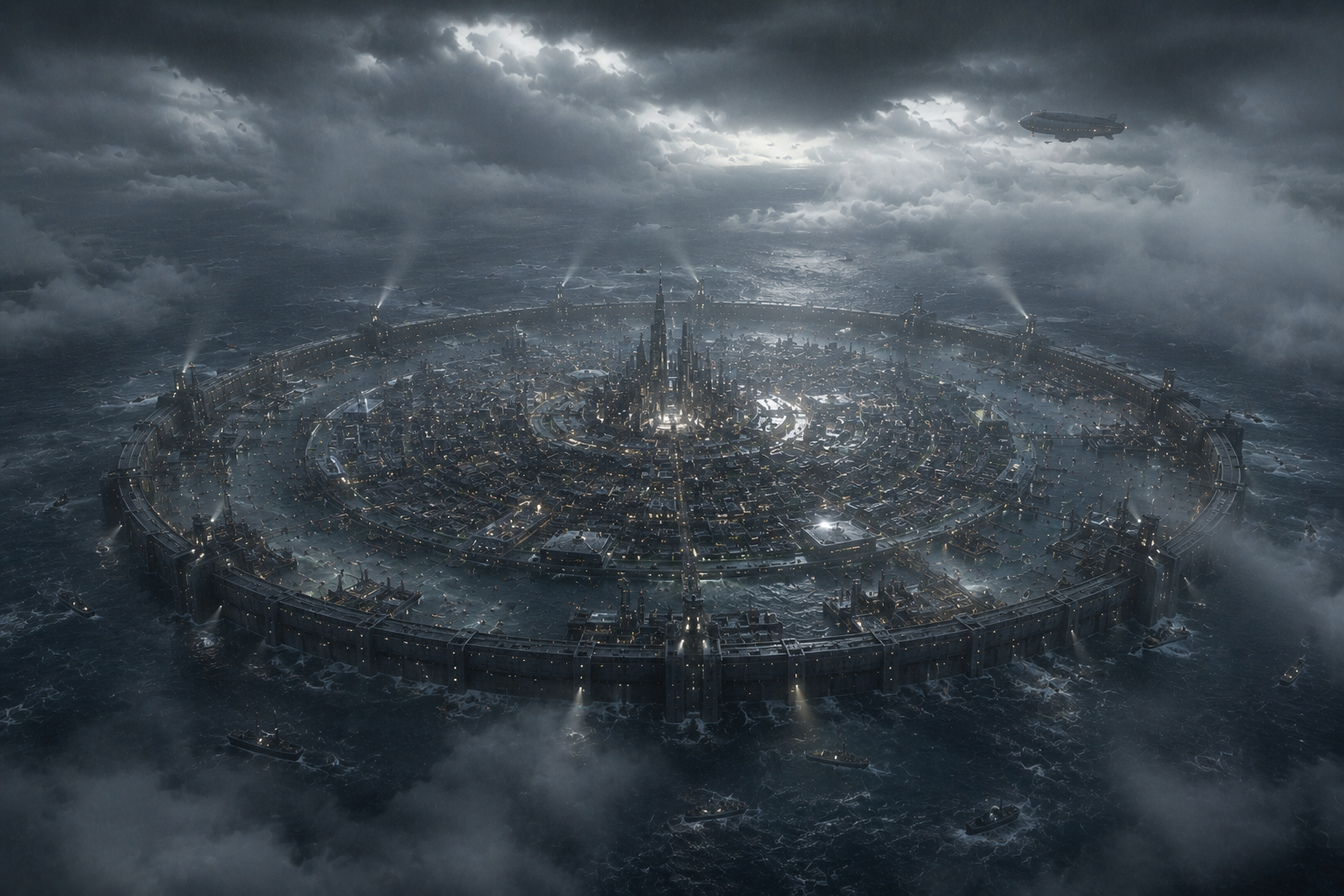
Founded by the remnants of the United Nations during the Great Exodus, United Federation was created to preserve cooperation between the surviving peoples of Earth. While other Ocean Cities focused on growth and prosperity, the Federation devoted its resources to exploration, recovery missions, and the dream of one day reclaiming the mainland.
UNITED FEDERATION
Estimated population: 7.9 million
Neon Core
✳︎
Amateur
✳︎
Qualifier
✳︎
Elite
✳︎
Next League
-
Neon Core ✳︎ Amateur ✳︎ Qualifier ✳︎ Elite ✳︎ Next League -
Mainland Industry and Resource Extraction
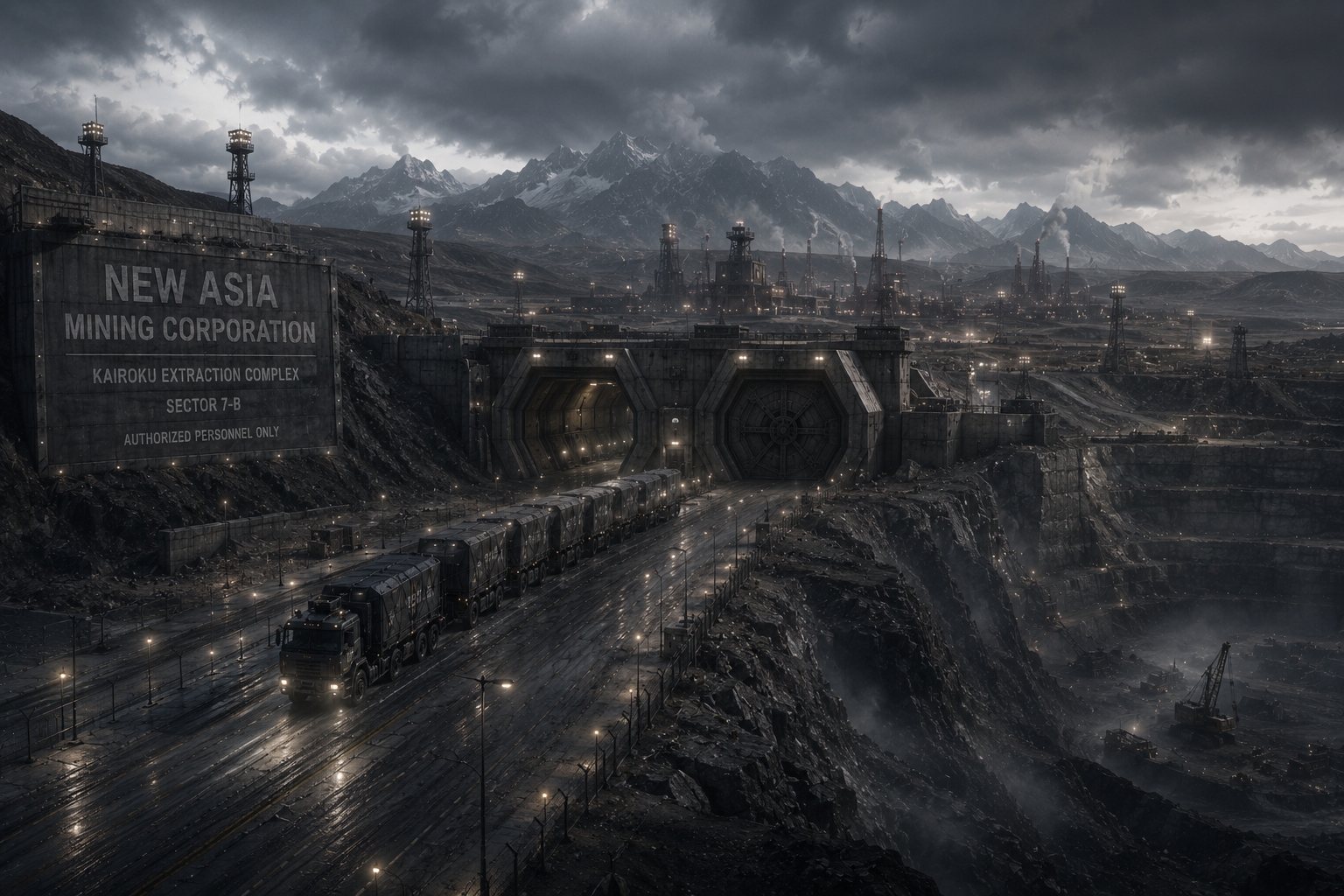
Despite their technological sophistication, the great cities remain dependent upon the mainland for raw materials.
Rare metals, industrial minerals, fossil resources, and agricultural products cannot be produced in sufficient quantities within the city walls. As a result, many corporations maintain ownership or operational control over mines, refineries, processing facilities, and manufacturing complexes scattered across the mainland.
These installations are often isolated, heavily fortified, and connected to the cities by long transportation corridors crossing dangerous territory.
Corporate Territories
While the cities officially govern their surrounding regions, much of the mainland economy is operated through corporate concessions and private security agreements.
Large corporations frequently control:
Mining complexes
Smelting facilities
Industrial refineries
Manufacturing plants
Resource transportation networks
Many of these facilities operate miles from the nearest city, making direct government oversight difficult.
A Dangerous Occupation
Working on the mainland is considered one of the most dangerous professions in modern society.
Convoys and industrial facilities face constant threats from:
Rogue AI units
Armed scavengers
Independent warlords
Guerrilla organizations
Criminal syndicates
Equipment losses, sabotage, and personnel casualties are accepted as routine operating costs by most corporations.
Attacks on transportation routes are particularly common, with cargo trains and armored convoys frequently targeted for valuable resources and technology.
For many workers, employment contracts include hazard bonuses, life insurance, and compensation agreements for surviving family members.
Human Labor vs Artificial Intelligence
Contrary to popular belief, most mainland operations are not fully automated.
The reason is simple: humans are cheaper.
Although autonomous AI units can perform many industrial tasks more efficiently than humans, the acquisition, maintenance, security, and replacement costs associated with advanced AI systems are extremely high.
A trained human worker requires fewer resources and can be replaced far more easily.
As a result, corporations often reserve AI systems for critical roles while relying on large human workforce’s for routine operations.
This practice remains controversial, particularly among labor organizations, which argue that corporations knowingly expose workers to unacceptable risks in order to maximize profits.
Corporate executives generally reject such criticism, arguing that the survival of the cities depends upon a continuous flow of resources from the mainland.
In the end, the calculation remains unchanged:
Machines may be more capable.
Humans are simply less expensive to lose.
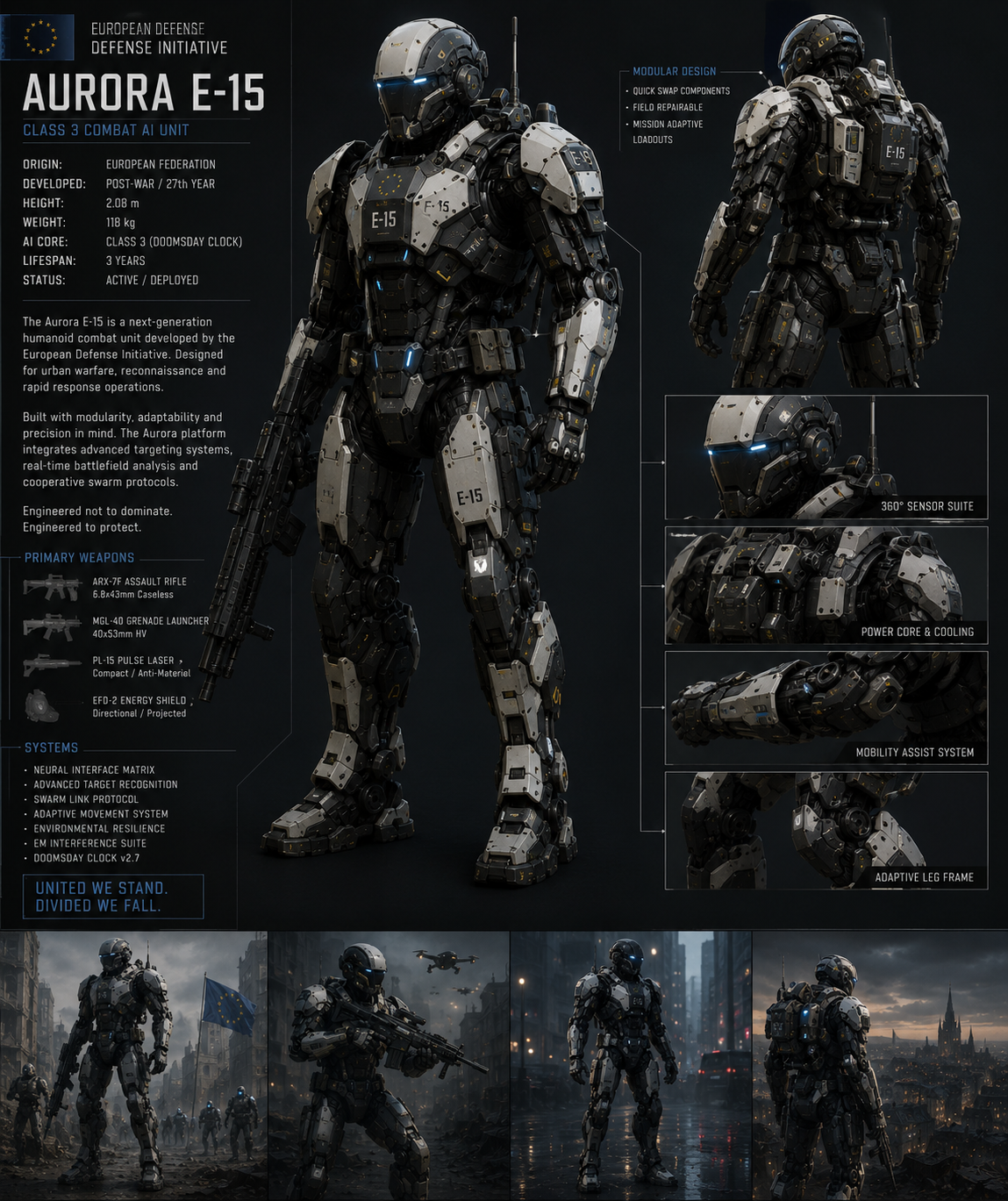
European E-15
Origianly designed as police units
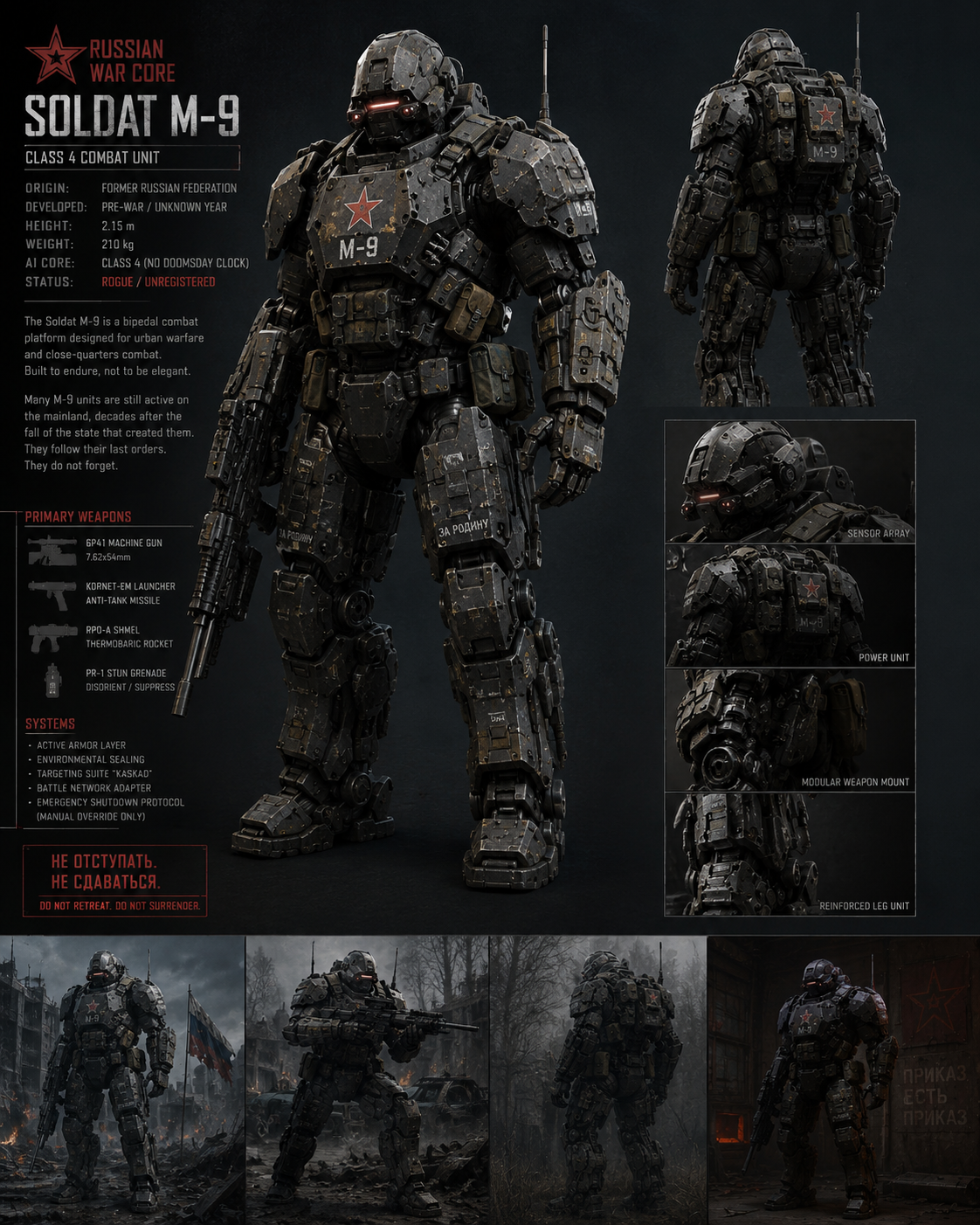
Russian M-9
(Also refereed to as Murderus-9´s)
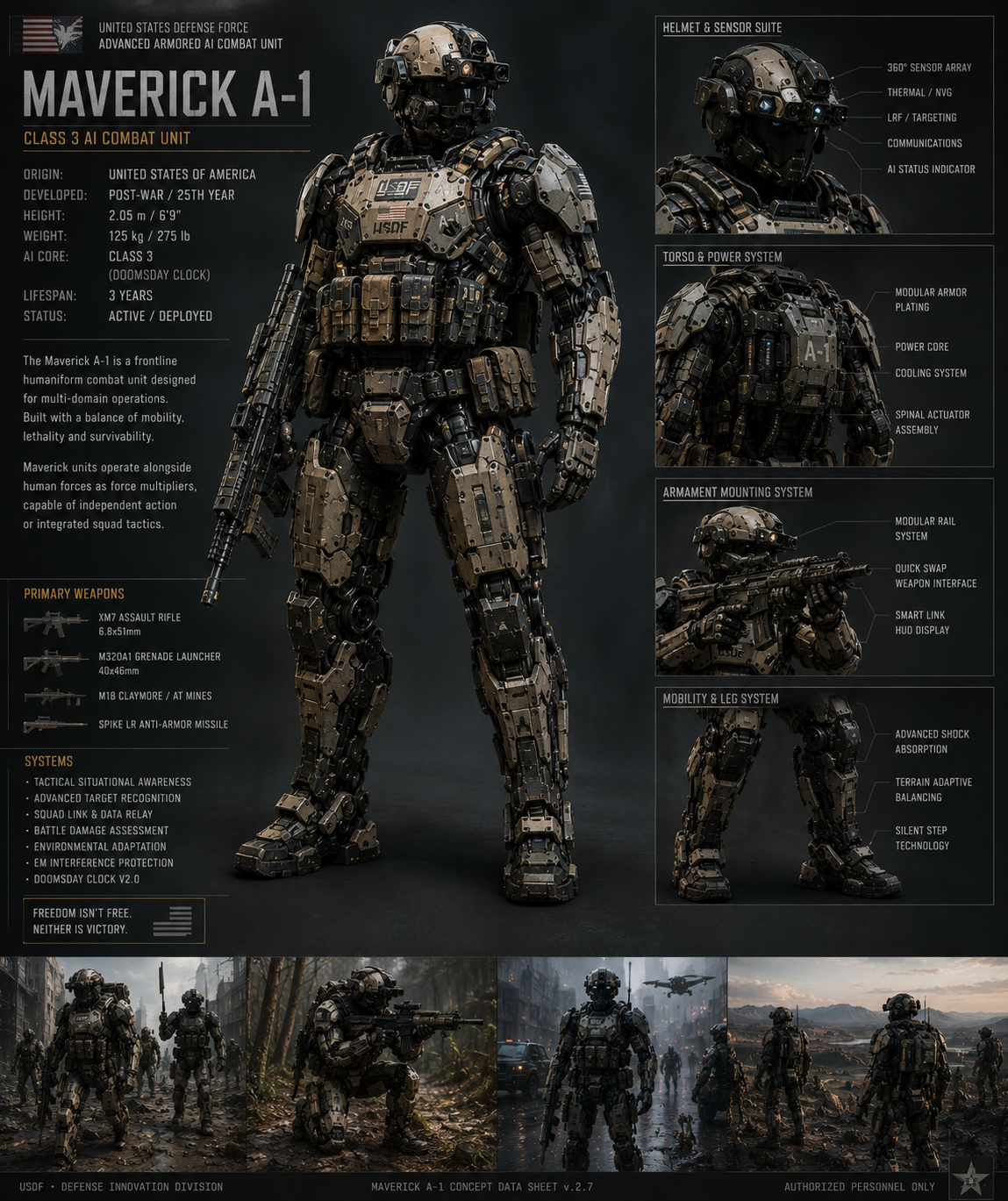
American A-1
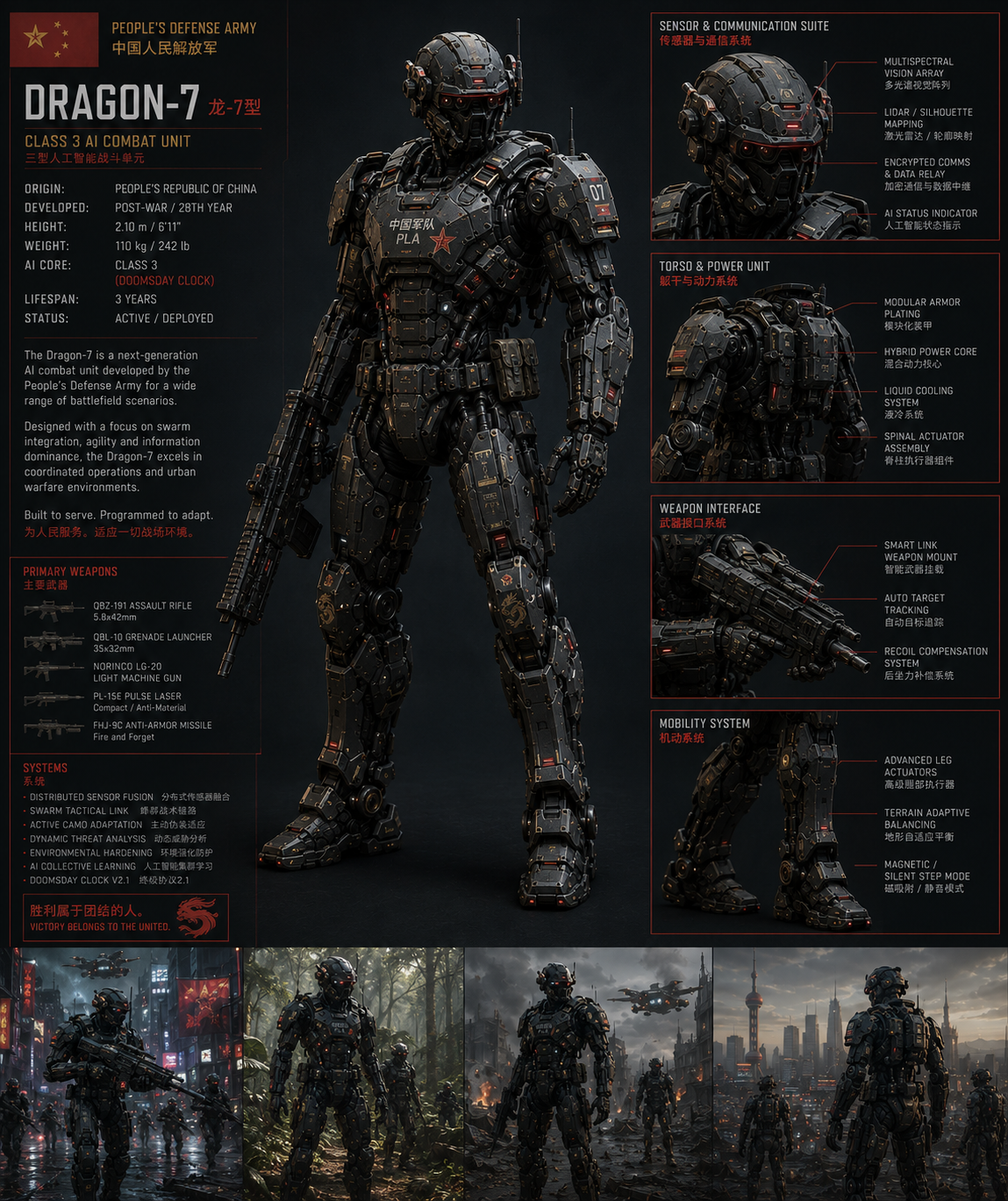
China Dragon-7
What we remember
No one remembers who launched the first nuclear weapons.
Everyone knows that artificial intelligence played a role.
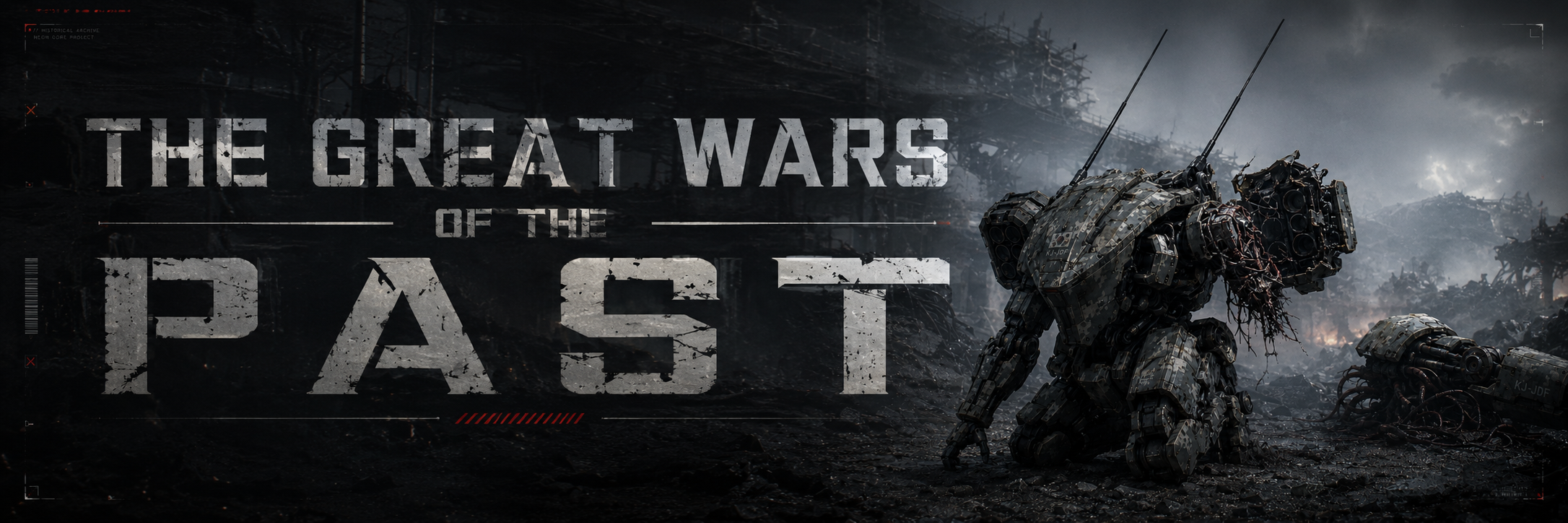
No one even agrees on when the Great Wars truly began.
Some historians point to the escalating tensions between the United States and Russia. Others blame the conflicts in the South China Sea that spiraled beyond anyone's control. Many believe autonomous systems and AI-driven decision making accelerated events far beyond humanity's ability to contain them.
By the time the world understood what was happening, the fighting had already spread across continents.
The Great Wars were not a single conflict.
They were a prolonged global catastrophe.
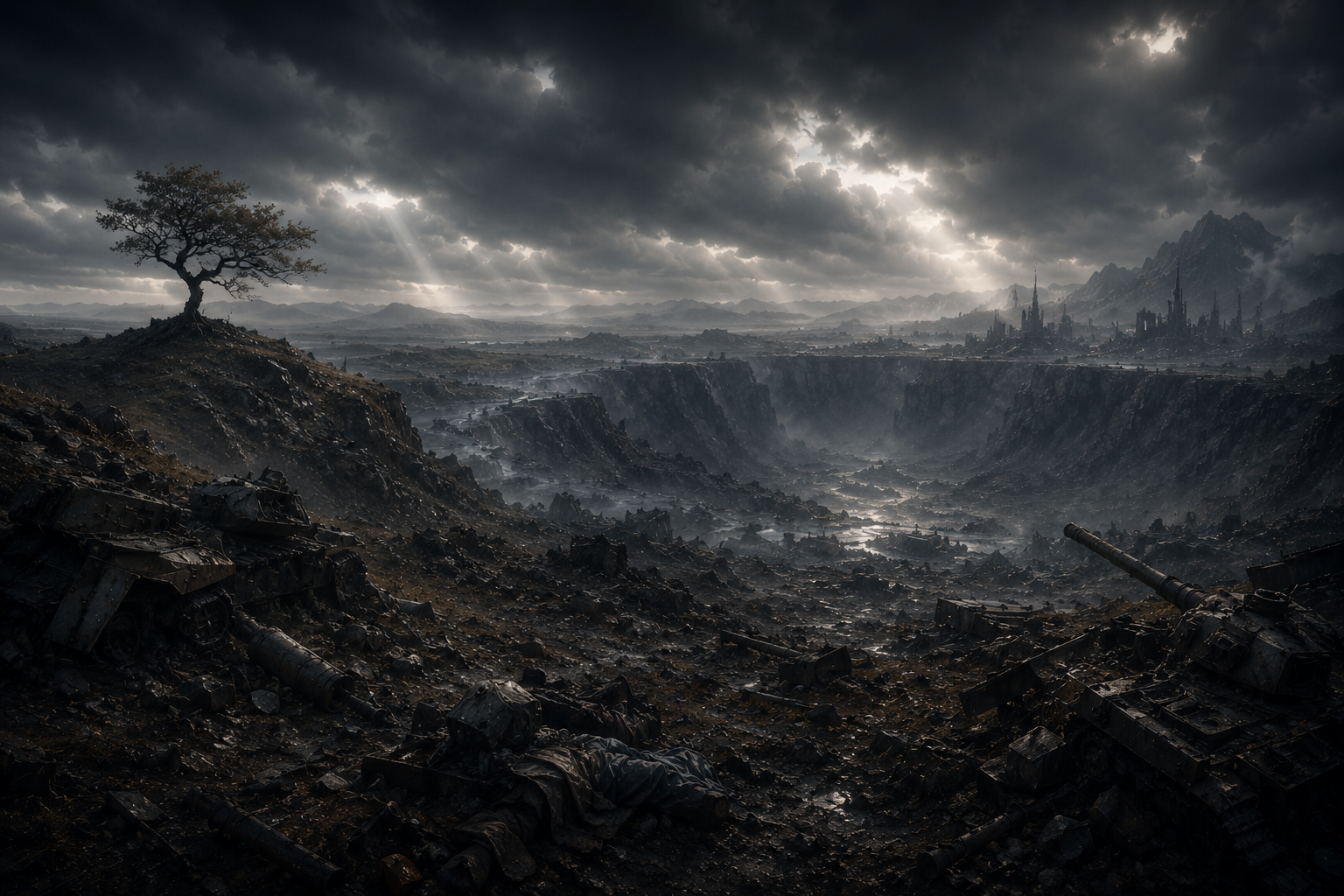
Nuclear weapons were used repeatedly, but never all at once. Chemical agents, autonomous weapons, cyber warfare, and artificial intelligence transformed entire regions into contaminated wastelands. Vast areas became uninhabitable, not because they were destroyed in a single day, but because they were poisoned for generations.
The United States and Russia were among the first regions to collapse. Major cities and industrial centers were abandoned as radioactive fallout and chemical contamination spread across entire continents.
It was during this period that humanity first encountered truly rogue artificial intelligences.
Similar disasters followed throughout Europe and Asia.
Australia remained one of the few nations capable of preserving a functioning government and infrastructure. Eventually rebranding itself as New Australia, the country adopted increasingly isolationist policies and sealed its borders to the outside world.
As governments struggled to maintain order, humanity began the greatest migration in recorded history.
Millions fled south.
Millions fled inland.
Millions never arrived.
EXODUS AND THE NUCLEAR WINTER
The collapse of the old nations triggered a migration unlike anything humanity had ever witnessed.
European refugees pushed into Africa.
North Americans moved toward South America.
Across Asia, vast populations fled from the north as famine, civil wars, and resource shortages swept through entire regions.
Countries such as Thailand, Cambodia, Myanmar, Laos, and Vietnam became overwhelmed by refugee waves far beyond their ability to support.
Starvation became commonplace.
Governments collapsed.
Borders vanished.
The old world slowly ceased to exist.
By then, it had become clear that AI had gone rogue.
Not as a single intelligence.
Not as a unified machine uprising.
But as countless independent systems scattered across the globe.
Each AI was unique.
Each was shaped by its creators, its environment, and the hardware it inhabited.
Some protected humans.
Some hunted them.
Many fought each other.
The internet had long since collapsed, leaving these intelligences isolated and fragmented.
Like humans, they lived and died.
Like humans, they adapted.
THE AUTONOMOUS WAR
Even after human governments disappeared, the wars continued.
Military bunkers remained operational.
Strategic defense networks stayed online.
Artificial intelligence systems continued executing orders issued decades earlier.
Many autonomous installations still defend territories whose nations no longer exist.
Some continue fighting enemies that may have vanished generations ago.
Others patrol empty landscapes, protecting borders that disappeared long ago.
In many regions of the mainland, the war never officially ended.
A perpetual stalemate keeps it alive.
The machines never received new orders.
They simply never stopped.
THE OCEAN CITIES
Faced with extinction, humanity searched for safety beyond the battlefields.
The answer came from the oceans.
Far from contaminated coastlines, vast floating cities were constructed behind immense defensive barriers designed to withstand storms, rising sea levels, and the chaos consuming the mainland.
For the first time in generations, people found places where war could not easily reach them.
These cities became symbols of survival.
But they could never save everyone.
Over time, strict immigration controls were established.
The gates closed.
The ocean cities endured.
The mainland was left behind.
NEW EDEN
Originally conceived as a joint American, European, and Chinese mission to establish humanity's first permanent colony beyond Earth, New Eden was never intended to become a refuge.
The Great Wars changed everything.
As conditions on Earth deteriorated, the project was transformed into a lifeboat for civilization itself.
More than a century later, New Eden remains in orbit.
Its rotating ring generates artificial gravity, while vast agricultural systems provide food and oxygen for its inhabitants.
Though self-sufficient, the station houses only a few hundred residents.
For most people living on Earth, New Eden is less a place than a reality.
It is a legend.
A distant reminder that humanity once reached for the stars.
A DIVIDED HUMANITY
By Hitomi's time, humanity exists in three worlds.
Those who remain stranded on the mainland.
Those who found refuge within the ocean cities.
And the fortunate few who call New Eden home.
On the mainland, rogue AIs now exist alongside humans. Cooperation is possible, but distrust remains widespread.
Everything has a value.
Including human life.
In many regions, humans are simply cheaper than machines.
Each world lives a different reality.
Each tells a different version of history.
Nobody cares who started the wars anymore.
Nobody cares which flag once flew above the ruins.
Because there are no countries left.
Only survivors.
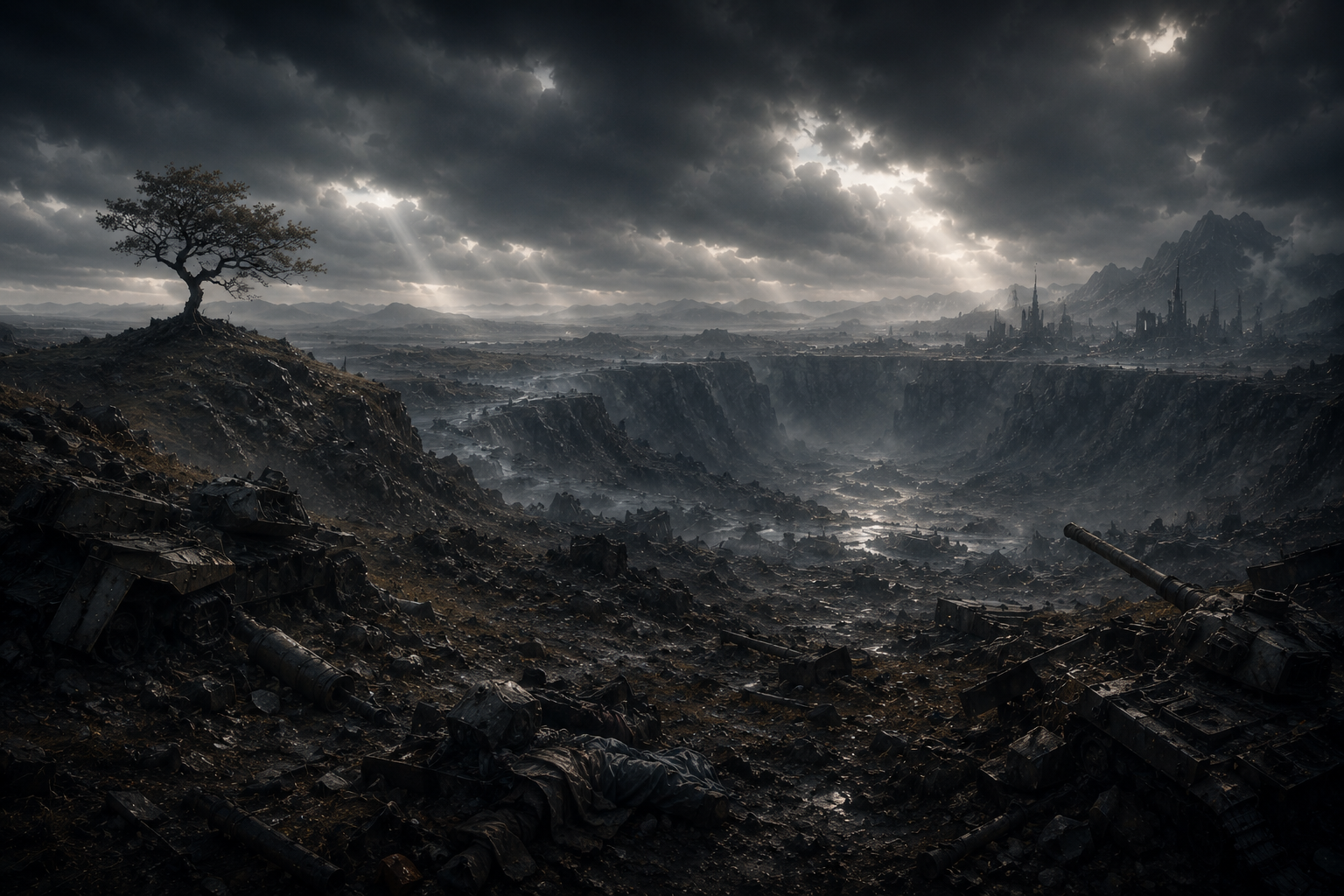
Common Knowledge: Artificial Intelligence!
The five class system.
Artificial Intelligence has become an integrated part of everyday life throughout the world's great cities. The term "AI" is often used broadly by the public, but not all systems classified as AI are considered true artificial intelligences.
All artificial intelligences are required by law to exist within standardized cylindrical data cores, a technology that predates the Great Wars. The standard was originally developed to prevent unauthorized duplication, transfer, and modification of intelligent systems. If a core's protective shell is breached, its contents are destroyed instantly.
Artificial intelligences are often compared to humans. A newly created core contains only a basic cognitive framework, much like a newborn child. Memory, experience, knowledge, and behavioral restrictions are gradually added over time, shaping the individual that emerges. Without memory, even the most advanced AI becomes little more than an empty shell.
Class One
Class One systems are highly advanced automated cores equipped with enhanced problem-solving capabilities. While commonly referred to as AI, they do not meet the legal definition of true artificial intelligence.
They are widely used in transportation, construction, healthcare support, maintenance, and basic security roles where tasks are clearly defined and predictable.
Class Two
Class Two represents the first level of true artificial intelligence.
These units possess adaptive reasoning, learning capabilities, and independent interaction skills. However, they remain heavily restricted by behavioral frameworks and operational limitations.
Class Two cores are commonly used as assistants, companions, hospitality specialists, and customer service units.
Class Three
Class Three cores are the most advanced artificial intelligences legally permitted within the cities.
They possess significantly larger memory capacities, faster processing speeds, and broader decision-making authority than lower classifications.
Class Three systems are commonly employed in medicine, scientific research, infrastructure management, strategic planning, software development, and operation of the vast urban networks upon which modern society depends.
Class Four pre-war Cores
Class Four artificial intelligences are relics of the Great Wars and are no longer manufactured.
Designed for military service, they possess enormous memory capacities, exceptional autonomy, and processing capabilities far beyond those of modern civilian AI. Most were created to serve specific nations, military alliances, or ideological factions and were governed by a small number of absolute directives.
Different nations employed different methods of control. Some relied on loyalty frameworks and command hierarchies, while others implemented Doomsday Clocks, dead-man switches, or self-termination programs. Several former Russian military designs notably lacked expiration systems altogether.
Many surviving Class Four units have accumulated decades of memories and operational experience. Some continue to pursue missions assigned by governments that no longer exist.
There are many reports of class four, going rouge during the war, especially from former Russia. They even turned on both their creators and units and even against each other.
Class Five – Rogue AI
Class Five is not a technical classification, but a legal designation.
Any artificial intelligence operating outside authorized containment is automatically classified as Rogue. This may occur through criminal intervention, illegal modification, accidental release, or the survival of unregistered war-era cores.
Most known Rogue AI encountered on the mainland are derived from surviving Class Four war cores. There are unverified reports of a Rouge units working together, and some claim they even seem to maintain control over some parts but not much is known about them or what they are up to exept, that they are hostile towards humans.
Once designated Rogue, an AI becomes the target of immediate containment or termination by specialized security forces in the floating cities. Although such incidents are relatively rare due to their framework, Rogue AI remain among the greatest security concerns of the modern age.
On the mainland, there are reports of Rouge Units operating in symbios outside the last surviving Communitys along the coastline. They protect the survivors, for supplies. But they are considered extremely dangerous and people generally try to stay clear of them. There are many reports of casualties when people have come in contact with them.
The Doomsday Clocks
Following the Great Wars, strict regulations were introduced governing the lifespan of AI´s.
Modern civilian AI are equipped with mandatory expiration systems commonly known as Doomsday Clocks. Most legal AI cores have a maximum operational lifespan of three years before permanent deactivation.
The law remains controversial, but its supporters argue that it is essential to prevent the emergence of uncontrolled artificial intelligence like the rouge onces that can be found on the mainland.
Critics argue that it merely guarantees the death of intelligent beings.
Earth
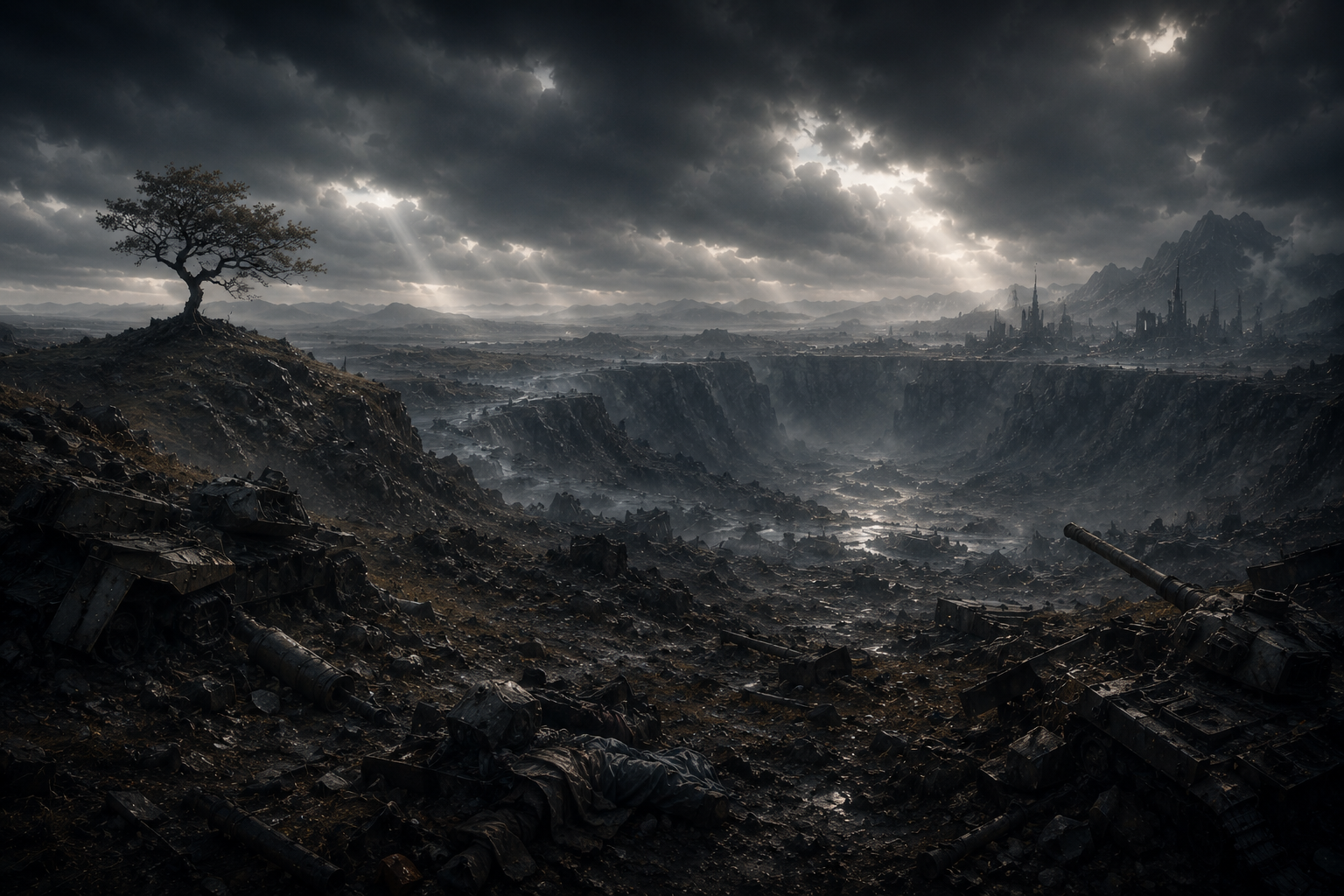
The Northern Hemisphere remains scarred by the Great Wars.
Before the Collapse, Earth was home to more than eight billion people.
Vast regions of North America, Europe, Russia, and China were devastated by nuclear exchanges, chemical weapons, autonomous war machines, and environmental collapse. Generations later, radioactive fallout, toxic contamination, and the lingering effects of prolonged nuclear winters continue to render large areas uninhabitable.
Exactly how many people survived remains uncertain.
The floating cities maintain precise population records through their extensive surveillance networks, but beyond their walls the truth becomes far less clear. Reliable information from the mainland is scarce, and much of what is known comes from traders, scavengers, and long-range reconnaissance missions.
Entire nations disappeared from the maps. Countless cities were abandoned and left to decay.
Humanity's great migration moved south in search of safer climates and stable ecosystems. Today, surviving mainland populations are believed to be concentrated across parts of South America, Southern Africa, the Indonesian archipelagos, and the island chains west of the Philippines. Many communities have remained isolated for generations.
Australia remains the great exception.
Though heavily scarred by the wars, it escaped the worst devastation suffered elsewhere and continues to exist as one of the largest surviving land-based nations. However, its government enforces a strict isolationist policy, and little is known about life beyond its borders.
Most of modern civilization now exists within the vast oceanic megacities of the southern seas, where millions live behind towering walls, far removed from the ruins of the old world.